Avidclan Technologies
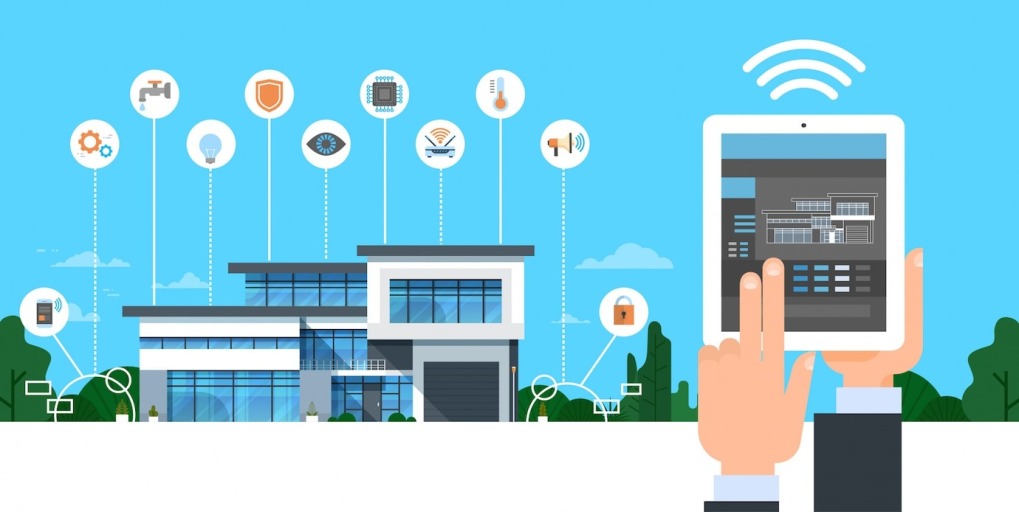
Industry 4.0, more commonly referred to as the fourth industrial revolution, is revolutionizing how manufacturers and logistics firms run. From predictive maintenance to real-time monitoring, IoT is driving this change.
And here is the bigger question: Where does .NET fit in all this?
.NET has subtly risen to become among the best platforms for creating scalable, dependable, and safe Industry 4.0 applications, given its cross-platform reach, cloud integration potential, and strong development tools.
We will examine in this article how .NET facilitates smart device connectivity, what tools are offered for IoT integration, and how companies might use it to create smarter operations.
Why .NET Is a Strong Choice for Industry 4.0 Applications
.NET is no longer restricted to desktop and web applications. Particularly with .NET 6, 7, and 8, the current .NET platform has developed to support real-time, edge, and cloud-based workloads; Therefore, it is a great choice for IoT and smart factory projects.
Here is why:
- Cross-platform development: Create applications for embedded devices, Windows, and Linux.
- Scalability: .NET can manage high-throughput systems, whether they are one device or one million.
- Cloud-native: easily combine on-site services with Azure IoT Hub and AWS IoT Core.
- By design, Secure transfer of data and device authentication relies on embedded security methods.
All driven by .NET-backed IoT infrastructure, many companies collaborating with a .NET development firm are currently adding data collection, automation, and smart alerts to their applications.
How .NET Links Smart Devices and Internet of Things Hardware
Connecting with Internet of Things (IoT) devices often entails dealing with embedded systems and low-level hardware protocols. That might not seem like .NET turf; However, things have evolved.
.NET + IoT Hardware = A Powerful Combo
You can use .NET IoT Libraries:
- On devices like Raspberry Pi, communicate directly with GPIO pins, SPI, I²C, and PWM.
- Link embedded elements, including motors, sensors, and many others.
- Write tidy, manageable device drivers in C.
Developers may control physical hardware using current programming paradigms—no need to switch to C or Python unless you want to.
.NET's support for edge computing is developing as well; frameworks like Azure IoT Edge let you deploy .NET applications straight to gateways and edge devices closer to the data source.
For businesses offering .NET Core development services , this means you can deliver full-stack development from edge sensors to cloud dashboards in a single technology stack.
.NET and Azure IoT Real-Time Data Processing
Data collection is insufficient in Industry 4.0. To obtain insights and propel automation, you must process it in real time.
.NET's Azure IoT service integration makes this possible:
- Secure two-way communication between devices and cloud services is managed by Azure IoT Hub.
- Real-time event processing and business logic execution are enabled by Azure Functions.
- Trend detection and anomaly tracking are aided by Stream Analytics and Time Series Insights.
Typical application scenarios:
- Find unusual temperatures in manufacturing machines and set off a real-time alert.
- Track energy consumption throughout several structures to help with cost optimization.
- Live sensor data will guide the control of warehouse robots.
If you are hiring dedicated .NET developers , they can help design these systems end-to-end, from the device firmware to the analytics pipeline.
Creating .NET adaptable IoT dashboards and APIs
ASP.NET Core shines here: you need a means to control the system and show the data once your smart devices are running.
Using ASP.NET Core and Blazor, you can create
- Responsive web dashboards for tracking IoT networks
- Administrative access portals for status tracking and device management
- Connect mobile apps or outside systems, APIs
Real-time dashboards benefit much from Blazor since it enables interactive UI changes via SignalR and WebSockets.
Staying within the .NET universe helps you avoid language switching and helps you to keep uniform code across backend, front-end, and IoT logic. Many companies decide to engage committed .NET developers for Industry 4.0 initiatives for this reason, as the efficiency shows itself quickly.
.NET for IoT: Challenges and Factors to Consider
No platform is flawless, and there are some crucial factors to take into account while picking.
- Device footprint: Although .NET has gotten better, very low-powered microcontrollers such as Arduino may still call for other languages.
- Some cloud functions, eg, cold start time unless pre-warmed, Azure Functions in C may have a little delay on the first run.
- Not all sensors have native .NET libraries; sometimes, bespoke development is needed.
That said, .NET is more than adequate for most industrial uses, particularly those involving Raspberry Pi, Windows IoT, or Linux-based edge devices.
An expert .NET development firm can assist you in negotiating these choices, choosing the appropriate tools for your project, devoid of over-engineering or under-delivering.
Conclusion: .NET Is Industry 4.0 Ready
.NET meets all three demands: flexible, scalable, and future-proof platforms for Industry 4.0.
From managing smart sensors to creating interactive dashboards and cloud analytics integration, .NET provides you with a whole toolbox for creating current IoT solutions. With native Azure connection, a robust developer ecosystem, and changing open-source libraries, it has never been easier to bridge the physical and digital worlds.
Now is the time to investigate what .NET can do for your smart factory or industrial application, whether you are starting from scratch or building upon an existing system. If you require professional direction, think about working with a .NET development firm that knows how to properly integrate IoT with business applications.
Kommentare
Verantwortlich für den Inhalt dieser Seite ist ausschließlich der
Autor dieser Homepage, kontaktierbar über dieses Formular!